The Commercial Elevator Specification: What Building Developers Keep Getting Wrong
A specification written without independent input protects the contractor, not the owner. The mistakes developers keep making, and what a specification needs before it goes to tender.

- Published
In this article 7 sections
In this article
- The specification is written twice: before the tender and again as variations
- What a commercial elevator specification must cover
- Traffic analysis is where most specifications fail first
- NCC 2025 compliance is not the contractor’s responsibility to specify
- The maintenance provisions most developers do not read
- What the independent consultant does that the contractor cannot
- What to do before the next commercial elevator project
A commercial elevator specification written without independent expertise produces a document that protects the contractor, not the building owner. Contractors invited to tender against a poorly scoped specification quote what suits their product range. The building owner receives proposals they cannot compare, selects on price, and discovers the gaps when variations arrive during construction. The specification written before the tender goes out is the most valuable document in a commercial elevator project. Most building owners do not have one.
The specification is written twice: before the tender and again as variations#
In most commercial elevator projects that go wrong, the pattern is the same.
A developer or building owner prepares a brief based on floor count, approximate traffic, and a budget range. That brief is sent to contractors. Each contractor prices what they know how to build and what they want to sell. The proposals come back with different configurations, different drive systems, different finishes, and prices that cannot be meaningfully compared.
The building owner selects the cheapest or the one they find most convincing in a sales presentation. The contract is signed. Construction begins. Then the variations arrive.
Each variation is individually justifiable. Structural modifications the brief did not address. Electrical supply upgrades outside the elevator contractor’s scope. A control system interface with the building’s access management platform that no one specified. A machine room configuration that does not fit the space as built.
By the time the elevator is commissioned, the cheapest tender has become one of the most expensive line items in the project.
What a commercial elevator specification must cover#
A specification written to protect the building owner rather than accommodate the contractor addresses each of the following before the tender goes out:
| Specification Element | What Happens Without It |
|---|---|
| Traffic analysis and handling capacity | Contractors size the elevator to their standard range, not the building’s actual demand |
| Drive system type and energy efficiency standard | Mixed proposals with no basis for comparison |
| Car dimensions and finish specification | Tenderers price what they stock, not what the building needs |
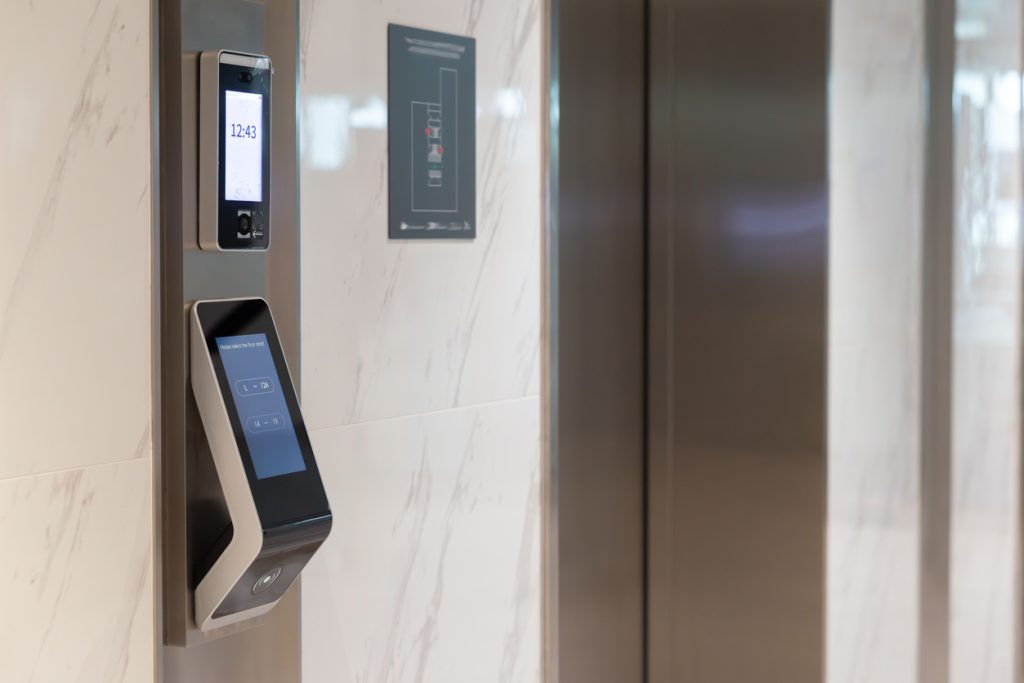
| Control system and destination dispatch requirements | Integration with access control becomes a variation |
| Machine room or machine-room-less configuration | Structural requirements emerge as variations after award |
| NCC 2025 and AS1735 compliance obligations | Compliance gaps discovered at certification, not at design |
| Maintenance access and service provisions | Contractor-favourable arrangements embedded in the design |
| Warranty terms and performance guarantees | Contractor-drafted terms accepted by default |
A specification that addresses each of these before tender is the document the building owner enforces for the life of the project. A brief that does not is a document the contractor interprets in their favour.
Traffic analysis is where most specifications fail first#
The most commonly omitted element in a commercial elevator specification is traffic analysis: a systematic assessment of the building’s peak demand, the number and size of elevators required to meet it, and the performance benchmarks the installed system must achieve.
Without traffic analysis, the building owner accepts whatever the contractor proposes. A contractor proposing a single elevator where two are required is not acting in bad faith. They are pricing what the brief asked for. How many elevators a building actually needs is a technical question with a technical answer. It should not be left to a sales proposal.
An undersized elevator installation in a commercial building is expensive to remedy after the fact. The shaft is built. The equipment is installed. Adding capacity means construction work the building was not designed to accommodate.
NCC 2025 compliance is not the contractor’s responsibility to specify#
A commercial elevator must meet NCC 2025 requirements and current AS1735 standards at the point of commissioning. Those requirements cover accessibility performance, energy efficiency, emergency communication, and car dimensions among others.
The compliance obligation sits with the building owner, not the contractor. A specification that does not explicitly require NCC 2025 compliance gives the contractor scope to argue that non-compliant elements were outside the agreed scope.
What NCC 2025 requires from a commercial elevator and why those requirements must be in the specification before the tender goes out is covered in detail on this site. Discovering compliance gaps at the certification stage, rather than the specification stage, means paying to rectify them on a completed installation.
The maintenance provisions most developers do not read#
A commercial elevator specification should address maintenance access, service intervals, and contractor obligations from the outset. It rarely does.
The consequence is that the maintenance arrangement defaults to the elevator contractor’s standard terms. Those terms are written to protect the contractor: response time obligations measured from notification rather than fault occurrence, exclusions on major components, auto-renewal clauses with penalty exit provisions, and performance benchmarks the contractor sets themselves.
How maintenance contracts are structured to protect the contractor rather than the building owner is a pattern that applies equally to commercial elevator installations and residential strata buildings. The scale is different. The mechanism is the same.
An independent consultant who specifies the maintenance requirements before the tender goes out gives the building owner a negotiating position at contract award rather than at the point of a dispute.
What the independent consultant does that the contractor cannot#
A contractor writing a specification for their own tender is writing a document that favours their product range. That is not a criticism. It is a statement of commercial reality.
An independent elevator consultant has no product to sell. The specification they write is based on the building’s requirements, not on what is convenient to supply. That difference is the entire value of independence in a procurement context.
Specifically, an independent consultant:
- Conducts traffic analysis and determines the correct elevator configuration before the tender
- Writes a specification that all tenderers must price against with no departures accepted
- Manages the tender process and issues addenda when contractor questions reveal specification gaps
- Evaluates proposals against the specification and identifies where tenderers have departed from scope
- Monitors construction against the specification and certifies completion milestones
- Conducts an independent commissioning inspection before sign-off
What happens to a project when that oversight is absent is covered in detail on this site. The pattern is consistent and the cost is measurable.
What to do before the next commercial elevator project#
If a commercial elevator installation, replacement, or major modernisation is in the program for the next 12 to 24 months:
- Commission an independent traffic analysis and needs assessment before writing any brief
- Engage an independent consultant to write the specification before the tender goes out
- Confirm NCC 2025 and AS1735 compliance requirements are in the specification, not deferred to the contractor
- Require all tenderers to price against the same specification with no departures or qualifications accepted
- Retain the independent consultant through construction and commissioning
The specification is the document the building owner enforces when things go wrong. It needs to be written by someone whose interests are aligned with the building owner, not with the sale.
ILCPL provides independent elevator specifications, tender management, and construction oversight for commercial building projects across Australia, New Zealand, and Asia. Call 0417 784 245.