
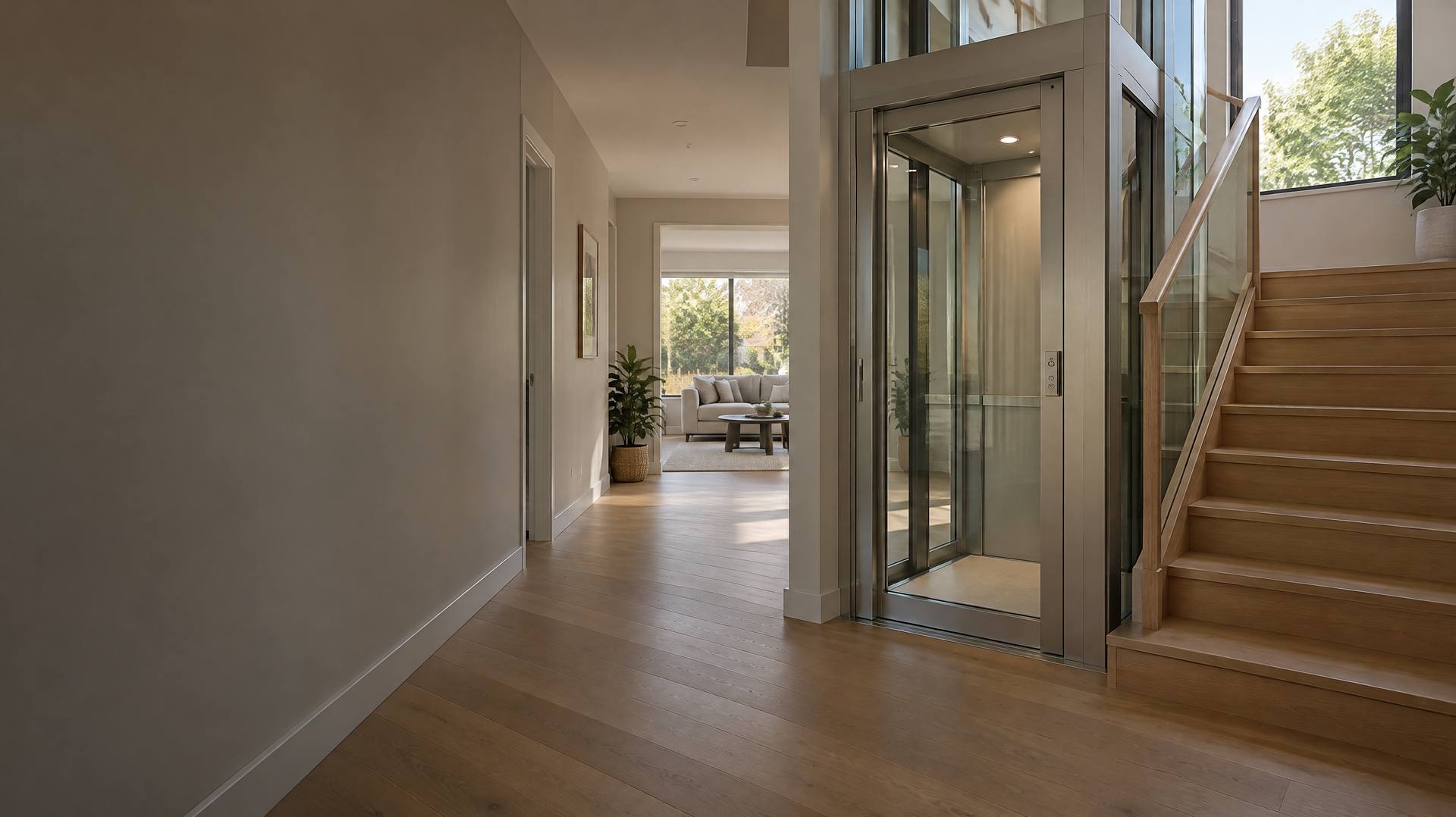
Home Lifts and Home Elevators
A home lift is a purchase made once, usually under some pressure, and almost always against sales advice from the party selling it. That is the wrong footing for a decision that affects the structure of the house, its resale value and the way its occupants move through it for the next twenty years. Independent home lift consulting gives residential owners an impartial position on which type suits the property, what it should cost and what the ongoing obligations are. ILCPL has provided independent lift consulting across Australia for nearly 50 years, and advises on home lifts, home elevators and domestic lifts on the same owner-side basis as its commercial work.
- Nearly 50 years of independent lift consulting across Australia
- Owner-side only no equipment supplied, no maintenance contracts held
- Every lift type roped hydraulic, pneumatic vacuum, winding drum and traction
- Residential and commercial the same owner-side basis applied to a home as to a tower
How we work
- Assessment
- Comparison
- Installation oversight
What we do
What Does a Home Elevator Consultant Do?
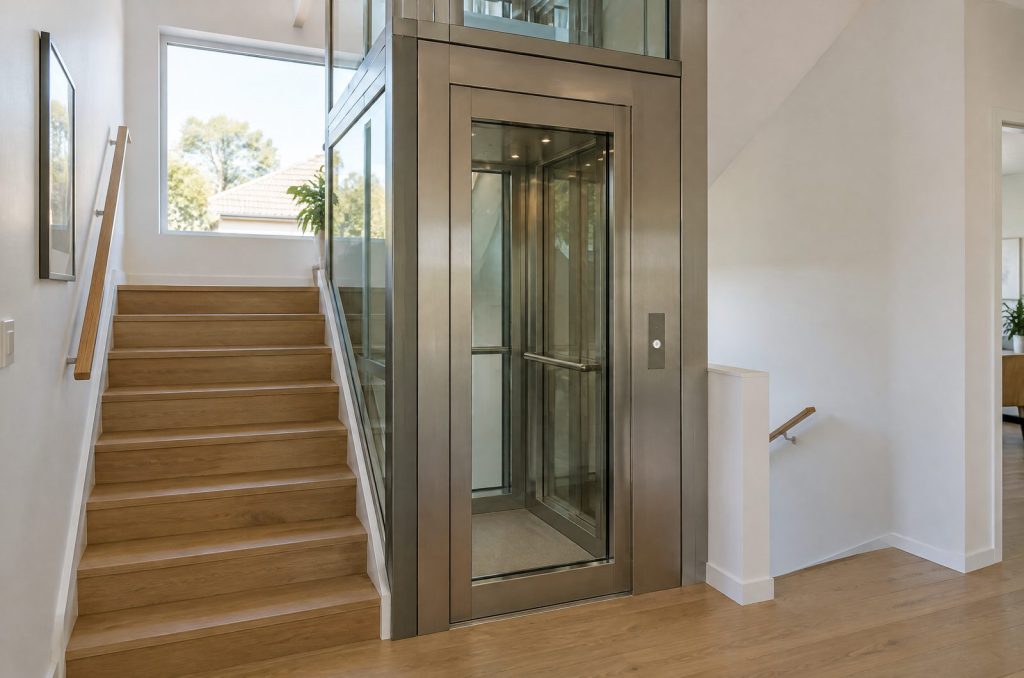
A home elevator consultant establishes what the house can accommodate, what the lift has to do and what the whole arrangement costs to own, before a supplier’s quote narrows the options. Most residential buyers start with a product and work backwards. The better sequence is the reverse.
The constraint is almost always physical. Available footprint. Ceiling height. Overhead clearance. Whether a shaft can be formed or a self-supporting structure is required. Whether the floor structure can take the loads. A compact domestic lift or a shaftless system resolves many of those constraints, but only if the assessment happens before a design is chosen.
The requirement is about use, not specification. Who will use the lift, how often, whether a wheelchair or walking frame has to fit, whether it serves two floors or three, and whether the household intends to stay long term. That is why how home lifts have become popular matters commercially: the market has moved from luxury addition to accessibility necessity, and the products that suit one brief do not suit the other.
ILCPL’s role is to hold that assessment independently of any supplier, and to stay involved through the stages where a residential buyer is least equipped to push back: the quote comparison, the installation scope, the certification and the maintenance arrangement that follows. The same owner-side framework applies to the wider independent lift consulting practice.
The clearest signals that independent advice is needed:- A lift is being considered and the house has not been properly assessed.
- Quotes have arrived and they cannot be compared on inclusions.
- A supplier has recommended a product before the requirement was established.
- Installation scope, certification or maintenance terms are unclear.
Cost
How Much Does a Home Lift Cost in Australia?
Home lift pricing in Australia is not a single figure, and a supplier quoting one before seeing the house is quoting a product rather than a project. Understanding what drives the figure is the difference between comparing quotes on equal terms and comparing them on the headline number alone.
The buying sequence usually runs in the wrong order. A supplier is contacted first. A product is presented. A price is attached to that product. Only then does anyone establish whether the product fits the house, the occupants or the plan. Reverse it and the number changes, because the requirement changes.
- The lift type. Pneumatic vacuum, roped hydraulic, winding drum and traction systems sit at materially different price points.
- Whether a shaft exists. An existing void or stairwell is a different project from a new shaft formed inside or outside the house.
- Travel and stops. A two-floor installation is not a three-floor installation.
- Capacity and platform size. A single-person lift sized for a walking frame is not one that carries a wheelchair and a carer.
- Finishes and door arrangement. The visible parts are priced separately from the mechanism.
- Certification, approval and making good.
- The engineering certification and building approval where required.
- The plastering, painting and flooring restoration around the installation.
- What happens to the warranty, and to the servicing obligation, after handover.
The only useful comparison is between quotes that specify the same lift type, the same travel, the same capacity, the same finishes and the same inclusions. Most residential quotes are not written that way, which is how a lower number ends up costing more. For a fuller breakdown of the variables, see how much a home lift costs.
Consultant vs supplier
Home Lift Consultant vs Home Lift Supplier
The most consistent source of avoidable cost in a residential lift purchase is treating a supplier’s recommendation as independent advice. A supplier sells, installs and often maintains their own product, which is a legitimate business. But their interest is not aligned with the homeowner’s when the question is whether that product is right for the house, the budget or the person who will use it.
A home lift consultant answers that question before commitment, and can conclude that a lift is not the right solution at all. Where the question is between a lift and an alternative, that is worth knowing before a deposit is paid.
| Factor | Home Lift Consultant | Home Lift Supplier |
|---|---|---|
| Represents | The homeowner | Their company |
| Primary role | Independent assessment, specification and quote review | Supply, installation and maintenance of their product |
| Assesses across all lift types | Yes | Only their own range |
| Benefits from a larger sale | No | Usually yes |
| Best used for | Judgement, comparison and owner-side oversight | Manufacture, installation and servicing |
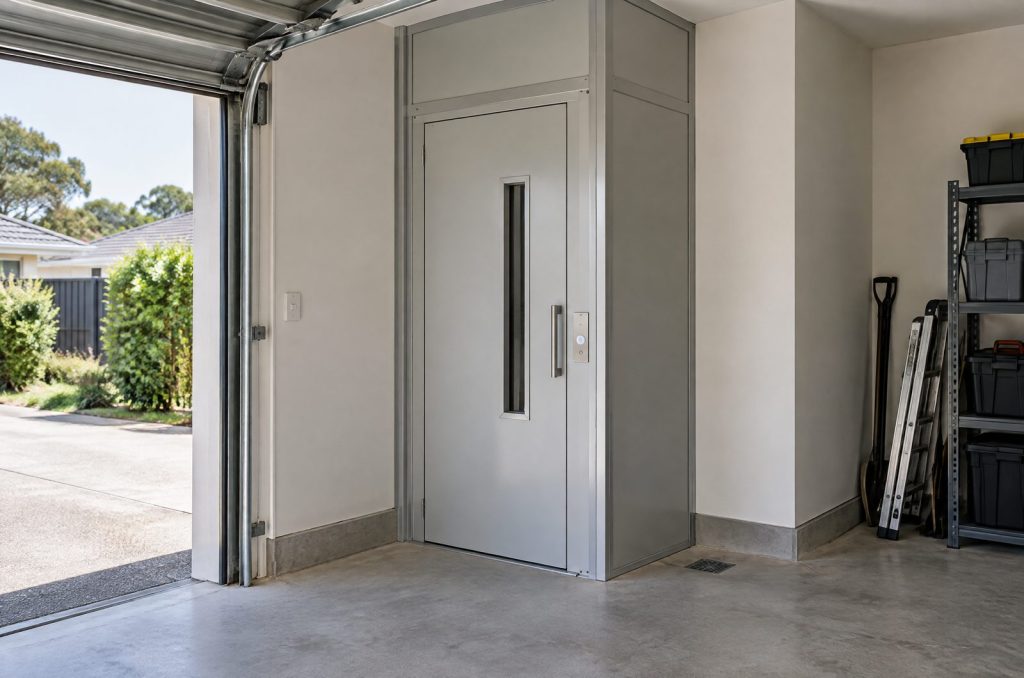
Who holds the risk on a residential installation?
The homeowner does. A residential lift is usually installed into an existing structure, so the interface between the lift and the house is where problems appear: floor loading, headroom, drainage, the making good around the shaft, and the certification that the installation complies. A supplier’s scope frequently ends at the edge of their product.
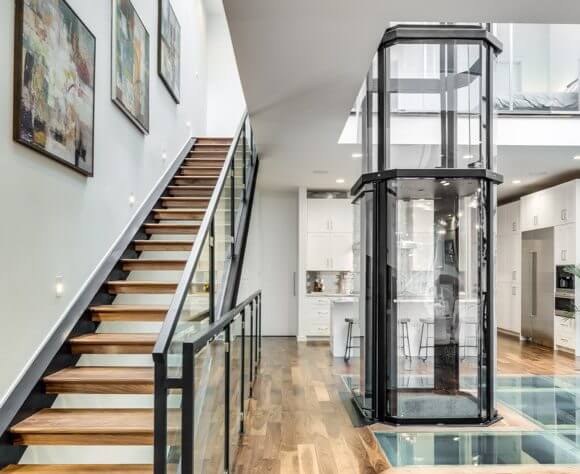
When does a supplier still matter?
Throughout the purchase. The supplier manufactures, installs and maintains the equipment. The consultant’s role is to ensure the right system is bought on comparable terms before signature, and that the maintenance arrangement afterwards is clear about what is covered and what it costs.
Services
Home Lift Consulting Services
The residential work covers the decisions a homeowner is least equipped to make alone, from feasibility through to the maintenance arrangement that follows installation.
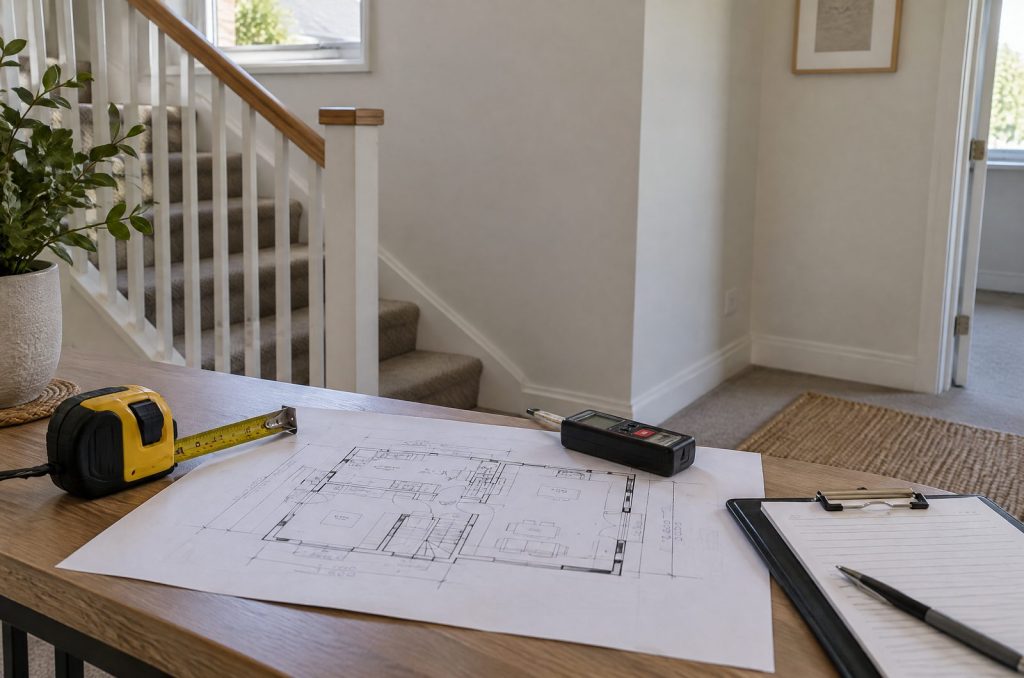
Feasibility and Lift Type Selection
An independent assessment of what the house can accommodate and which lift type suits the brief, the occupants and the budget, covering footprint, headroom, structural considerations and access during installation. The recommendation is documented, so it can be compared against what suppliers propose.

Quote and Proposal Review
Residential quotes are rarely written to a common specification, so headline prices are not comparable. ILCPL reviews proposals against the same scope, identifies what is included and excluded, and documents the differences so the decision is made on total cost. That single exercise is usually where the value of the engagement is realised.
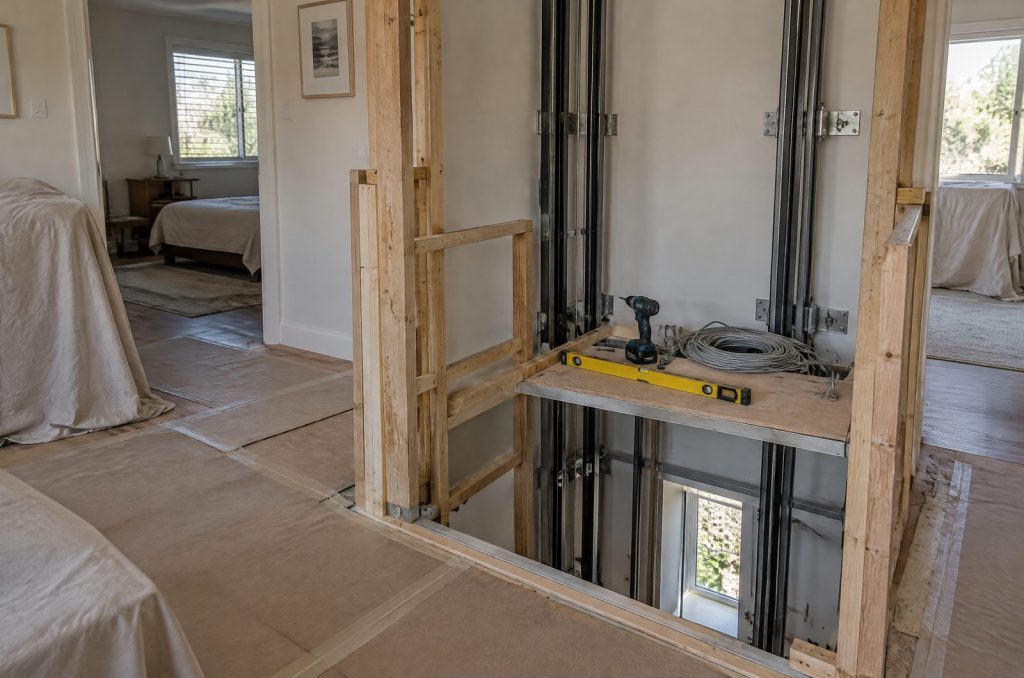
Installation Scope and Certification Oversight
Clarity on where the supplier’s responsibility ends and the owner’s begins, what certification is required and what making good is included. This is the part of a residential installation most often left ambiguous and most often paid for twice.
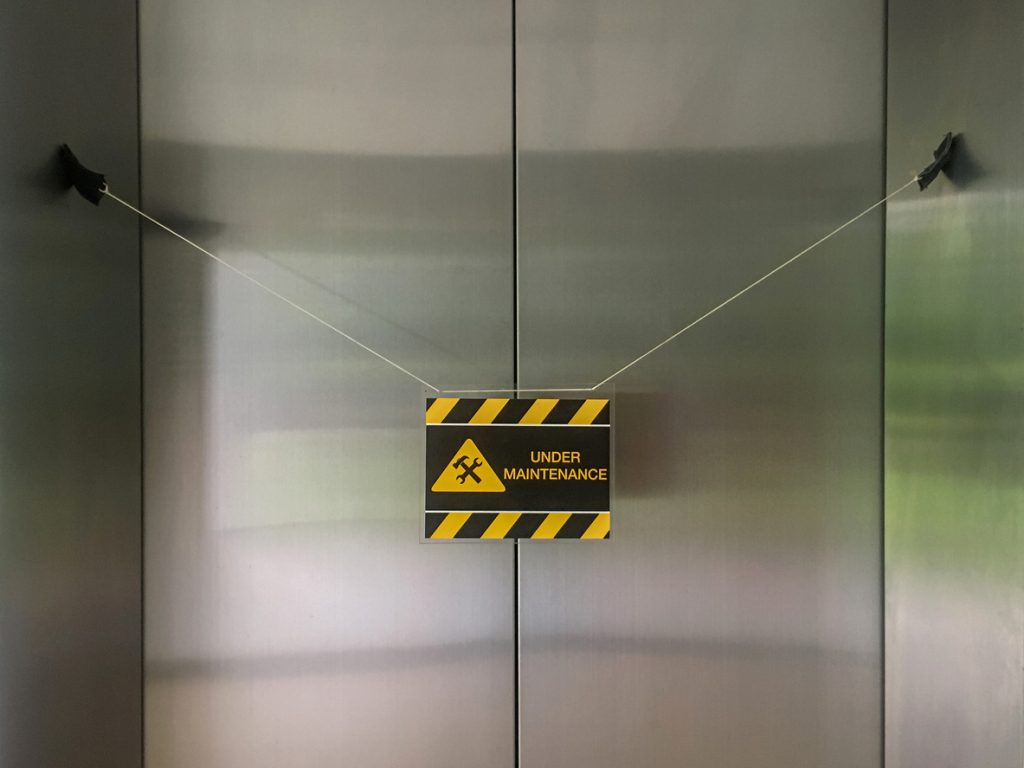
Home Lift Maintenance
A residential lift needs servicing on a defined schedule, and the arrangement should state attendance frequency, what is covered, response expectations and cost. ILCPL reviews those terms and the wider home lift maintenance obligations before they are signed, not after a fault appears.

Advice Across All Lift Types
The same independent position applies to passenger lifts in residential towers, service lifts in larger homes, and lift servicing arrangements across a residential portfolio. A home lift is a small asset with the same lifecycle obligations as a large one.
Lift types
Home Lift Types and How They Compare
Four systems account for almost every residential installation in Australia. Each resolves a different constraint, and the right choice usually follows from the house rather than from preference.
Roped Hydraulic Home Lifts
A hydraulic ram drives the car, with ropes managing the arrangement. Historically the most common residential choice where a machine space can be found, because it needs less overhead clearance than traction alternatives. The trade-off is a small power draw on standby and hydraulic fluid that requires servicing across the asset’s life.
Pneumatic Vacuum Home Lifts
The car travels inside a sealed cylinder and is moved by air pressure, which removes the need for a pit, a machine room or a load-bearing shaft. The most flexible option for retrofits where structural change is difficult, and the closest thing to a true shaftless elevator. Travel height and capacity are more limited than other types, which makes the assessment of who will use it critical rather than optional.
Winding Drum Home Lifts
A drum winds the suspension ropes to move the car, with a compact footprint and relatively low structural demand. Common where space is tight and travel is short. Because the drum carries the load directly, the maintenance regime matters more here than on other systems.
Traction Home Lifts
The standard commercial mechanism adapted to residential use, with counterweights and a sheave rather than a drum or ram. Smoother and more efficient over longer travel and multiple floors, and the better choice where the lift serves three levels. It requires more overhead clearance and a more substantial structure.
| Lift type | Best suited to | Main constraint |
|---|---|---|
| Roped hydraulic | Retrofits with limited headroom | Power draw and fluid servicing |
| Pneumatic vacuum | Existing houses with no shaft | Limited travel and capacity |
| Winding drum | Tight footprints, short travel | Load carried by the drum |
| Traction | Multi-storey and new build | Overhead clearance and structure |
Choosing
Choosing a Home Lift for Your House
The choice narrows quickly once the physical constraints and the actual use are documented. What follows is where most of the residential demand sits.
Compact Home Lifts
The largest single category of residential enquiry, because most houses were never designed with a lift in mind. A compact domestic lift is specified around the smallest viable footprint that still serves the person who needs it, and the mistake to avoid is choosing on footprint before confirming that a wheelchair or walking frame will fit.
Small Lifts and Platform Lifts
Where travel is short or the budget is tighter, a platform lift for the home can address an accessibility need without the cost and structure of a full residential elevator. Understanding where the boundary sits between a platform lift and a lift is one of the more useful conversations a homeowner can have before a supplier frames it for them.
Domestic Lifts for Two-Storey Homes
The standard case: a two-storey house, an internal void or garage corner available, and one or two occupants who need to stop using the stairs. Domestic lifts for this brief are usually the simplest installations in the category, provided the site assessment is honest about headroom and drainage.
Wheelchair and Mobility Lifts
Where the lift must carry a wheelchair and a carer, the capacity, platform size, door width and control placement all change. These installations are the least forgiving of a supplier-led process, because the product that fits the space is not always the product that fits the person. Accessibility considerations extending to control systems are covered in the material on accessibility and lift controls.
Residential Lifts in Larger Homes and Multi-Storey Buildings
Above two floors the economics and the technical picture shift toward traction systems and a properly formed shaft. Residential lift projects show the building types where this applies. Maintenance obligations grow with the specification, and maintaining home elevators is worth understanding before purchase rather than after.

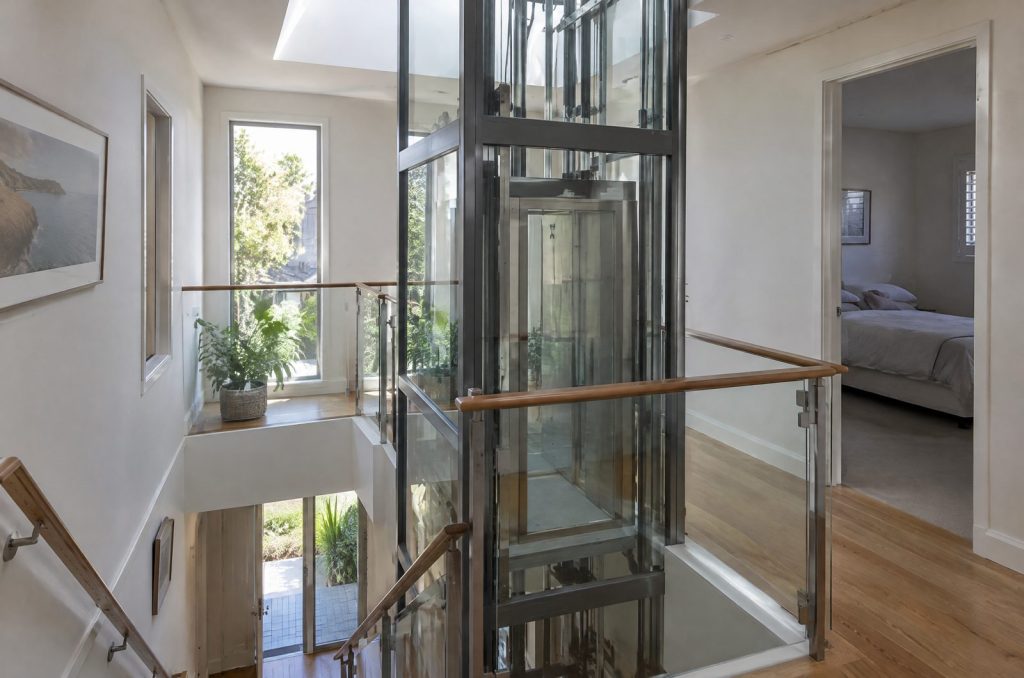
Two-storey retrofit
An internal void, a garage corner or an external shaft.
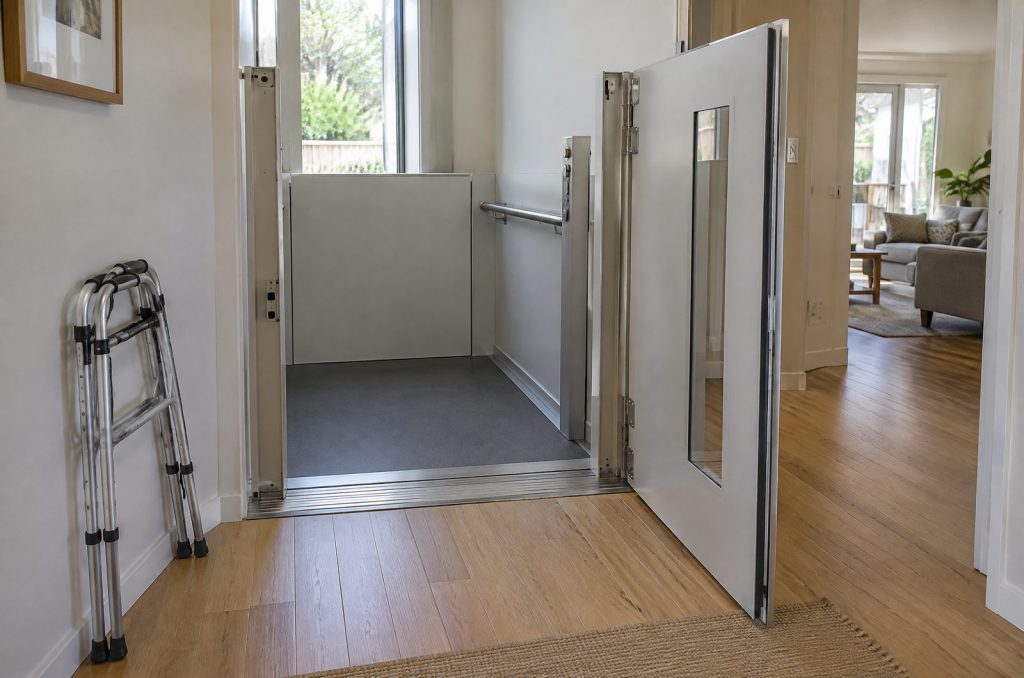
Accessibility upgrade
Wheelchair and walker access where the bathroom is upstairs.
Multi-storey home
Three levels or more, where traction becomes the practical choice.
FAQ
Frequently Asked Questions: Home Lifts
9 questions
What does a home elevator consultant do?
A home elevator consultant assesses what the house can accommodate, which lift type suits the occupants and the budget, and what the quotes received actually include. The advice is independent of any supplier, so it can include telling you that a lift is not the right answer for the property.
How much does a home lift cost in Australia?
Pricing depends on the lift type, whether a shaft exists, the number of stops, capacity, finishes and the certification and making good required. Two quotes are only comparable when those variables match, which is rarely the case. Contact ILCPL for an independent review of a proposal you have received.
Speak directly with the consulting team
0417 784 245No obligation to proceed. The initial conversation costs nothing.
Do I need planning approval for a home lift?
It depends on the house, the lift type and the local authority. Installations requiring structural change or a new shaft usually engage the building approval process, while a self-supporting compact lift may not. ILCPL identifies what applies to the property before a product is chosen.
What is the difference between a home lift and a residential lift?
In Australian usage they describe the same thing. Home lift, home elevator, domestic lift and residential lift all refer to a lift installed in a house rather than a commercial building. The terminology varies more than the product does.
Will a home lift fit in my house?
That is the first question a proper assessment answers. Footprint, ceiling height and overhead clearance determine what is possible before any product discussion. A compact or self-supporting system resolves many tight sites, but only once the actual dimensions are known.
What is the difference between a home lift and a stairlift?
A stairlift carries a seated passenger along a staircase and is an alternative for some households. A home lift carries a standing or wheelchair user between floors in a car. They solve different problems at different costs, and the right answer depends on mobility, space and how many people need to use it.
How long does installation take?
It varies with the lift type and the site. A compact lift installed into an existing void is a shorter programme than one requiring a new shaft formed within the house. ILCPL clarifies the realistic programme as part of the assessment, so the expectation is set before a contract is signed.
What maintenance does a home lift need?
A defined servicing schedule, a clear statement of what is covered, attendance frequency and response expectations. Those terms should be understood before purchase rather than discovered afterwards. ILCPL reviews residential maintenance arrangements on the same basis as commercial ones.
Is a home lift worth it for ageing in place?
For many households it is the difference between staying in the home and moving out. That makes the decision worth getting right rather than getting fast, and it is why an independent view is worth having when the alternative is relying entirely on a supplier’s recommendation.
Why ILCPL
Why ILCPL for Home Lifts
- Nearly 50 years of independent lift consulting, with home lifts and home elevators advised on the same owner-side basis as commercial assets.
- Owner-side only: no equipment supplied and no maintenance contracts held, so the recommendation is not attached to a sale.
- Coverage across every residential lift type: pneumatic vacuum, roped hydraulic, winding drum and traction, plus platform and mobility lifts.
- Lifecycle advice that extends beyond purchase to maintenance terms, servicing obligations and the certification that follows installation.
- Fully integrated with ILCPL’s elevator design and wider lift consulting services.

First step
Get Independent Home Lift Advice
The first step is a conversation about the house and the decision in front of it. ILCPL will say at that point whether a home lift is the right solution, what type suits the property, and what an independent review would involve. When you contact us, you speak directly with the consulting team. There is no obligation to proceed, and the initial conversation costs nothing. You can read more about the ILCPL team before reaching out, and what clients say gives a sense of how the work is described by the people who commissioned it.




Speak directly with the consulting team
0417 784 245- No obligation to proceed
- The initial conversation costs nothing
- No supplier is recommended on the basis of a commission